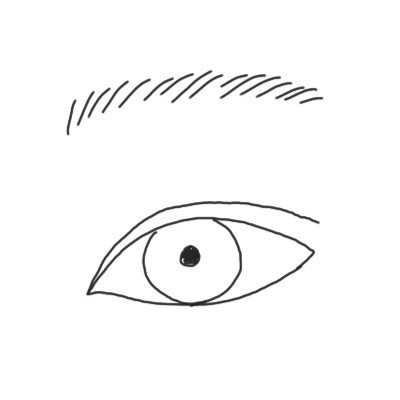
 no.6 [Double Eyelid] Types of Double Eyelid Lines Which double eyelid line would suit me? I think this is the first thing people considering double eyelid surgery wonder about. Everyone has a line that suits them and a line they prefer, so it helps to know what each type of line looks like (in-out, out, and so on) before your consultation. By the shape of the double eyelid, they can be divided into: Monolid (no double eyelid) In line In-out line Semi-out line Out line These are the main types. Monolid or hidden (inner) double eyelid In line A monolid is, of course, an eye without a double eyelid. An in line , as in the illustration above, is a line that is not visible at the inner corner of the eye but becomes visible from the middle or outer part . Because the line can still be seen with an in line, it is different from a hidden (inner) double eyelid. Many people think an in line is the same as a hidden double eyelid. ㅜㅜ In-out line An in-out line is visible from the inner corner and gradually widens toward the outer corner. It suits East Asian eyes best and is the most popular line. Semi-out line Out line The first one above is the semi-out line , which many people prefer these days. The difference from the in-out line is that it starts slightly lifted at the inner corner . An out line , shown below it, is a line that is fully lifted along its whole length . A semi-out line looks like an in-out line from some angles and like an out line from others, so many people find it confusing and can't tell them apart precisely. Going from the in line toward the out line, the line becomes higher and gives a more glamorous look. Take a look at the examples below and try to guess which line each one is. Which line would suit my eyes? Which line do I like? Take a moment to think about it. Related posts ▶ The Structure of the Eyelid and How a Double Eyelid Forms ▶ What Is the Ideal Method of Double Eyelid Surgery? WhatsApp Inquiries https://api.whatsapp.com/message/DE3GWE4FQGMDF1?autoload=1&app_absent=0 Sai Plastic Surgery — Phone Inquiries Main Line: +82-2-512-4647 * This post was written by Dr. Kwang-rae Kang, Director of Sai Plastic Surgery, with his own text and illustrations, for the purpose of providing medical information in compliance with Article 56(1) of the Korean Medical Service Act. + Read more
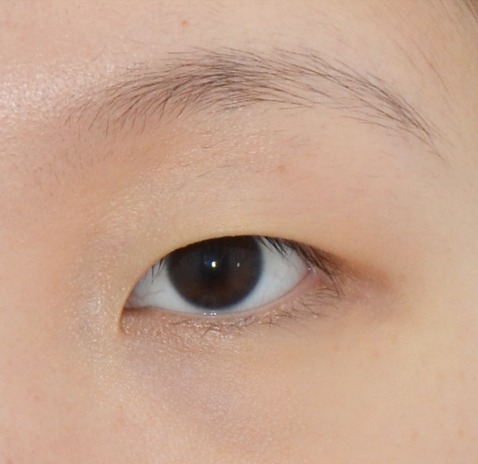 no.5 [Double Eyelid] Which Eyes Are Good Candidates for Non-Incision Double Eyelid Surgery? There are a few conditions that make an eye more likely to keep a non-incision double eyelid for a long time without it coming undone. Signs of an eye whose fold is unlikely to come undone The skin is thin. There is a moderate, not excessive, amount of eyelid fat. The eye-opening muscle is strong. The skin is neither too short nor excessively loose. The eye is neither markedly protruding nor sunken. An eye that meets these conditions is likely to keep the result for a long time, even with non-incision double eyelid surgery. However, it is not easy to tell on your own whether your eyes meet these conditions. An easy way to check your own eyes Here's a simple method you can try at home: create a double eyelid line with something like a toothpick. Some people do it with a fingernail. ^^; If, after creating the fold with the tool and then removing it, the double eyelid line stays for 5 seconds or longer, there is a good chance the line will last with non-incision surgery. On the other hand, if the line disappears as soon as you remove the tool, your eyes are more likely to need the incisional method. T-T If you understand these basics before visiting a plastic surgery clinic for a consultation, it will be easier to follow and help you make the right choice. Related posts ▶ Non-Incision Double Eyelid Surgery: Technique, Principle, Pros and Cons ▶ Why Non-Incision Double Eyelids Come Undone WhatsApp Inquiries https://api.whatsapp.com/message/DE3GWE4FQGMDF1?autoload=1&app_absent=0 Sai Plastic Surgery — Phone Inquiries Main Line: +82-2-512-4647 * This post was written by Dr. Kwang-rae Kang, Director of Sai Plastic Surgery, with his own text and illustrations, for the purpose of providing medical information in compliance with Article 56(1) of the Korean Medical Service Act. + Read more
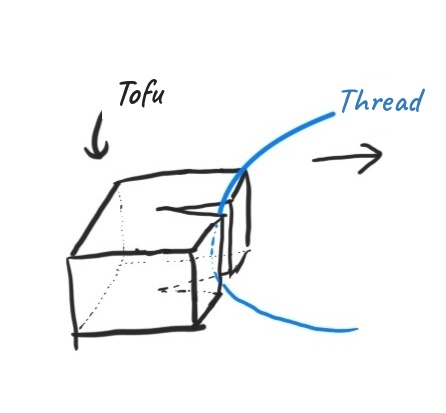 no.4 [Double Eyelid] Why Non-Incision Double Eyelids Come Undone "I had non-incision double eyelid surgery a while ago, but the fold has come undone." Among people who come in for double eyelid revision consultations, there are really a lot of cases like this. They describe all sorts of concerns: only one side came undone so the eyes look uneven, the eyes look dull, and so on. So why does a double eyelid that was holding fine suddenly come undone? Let's find out together. 1. When the double eyelid suture comes loose or breaks The most common cause is that the suture of the non-incision double eyelid has come loose or broken . The non-incision method creates the fold by tying sutures inside the eyelid, so the sutures must stay firmly in place for the fold to last. But for some reason, the knot can slip loose, or the suture itself can develop a problem and break . In these cases, the double eyelid usually disappears suddenly within a few days . I think people who say, "I woke up and my double eyelid was gone," fall into this category. A key feature is that the change happens within a short period of time. 2. When the suture is intact but no longer holds the skin well The second case is when the suture has not broken, but it no longer holds the skin properly . For example, if you hook a thread through soft tofu and pull, it holds its shape at first, but soon the tofu splits and the thread slips right out. Skin works the same way. At first the suture holds the skin well, but over time it gradually loosens and the fold comes undone. When the thread is pulled in the direction of the arrow, it cuts through the tofu and slips out. In medical terms, this phenomenon is called "cheese-wiring." Just as a wire cuts through cheese, the suture slowly works its way into the skin and weakens the tissue. In these cases, the double eyelid usually weakens little by little over a long period and feels loose, which is when many people come to the clinic. In the end, the answer is revision surgery, but knowing this will help you understand why your fold came undone and help you decide on the revision method. Related posts ▶ Non-Incision Double Eyelid Surgery: Technique, Principle, Pros and Cons ▶ What Is the Ideal Method of Double Eyelid Surgery? WhatsApp Inquiries https://api.whatsapp.com/message/DE3GWE4FQGMDF1?autoload=1&app_absent=0 Sai Plastic Surgery — Phone Inquiries Main Line: +82-2-512-4647 * This post was written by Dr. Kwang-rae Kang, Director of Sai Plastic Surgery, with his own text and illustrations, for the purpose of providing medical information in compliance with Article 56(1) of the Korean Medical Service Act. + Read more
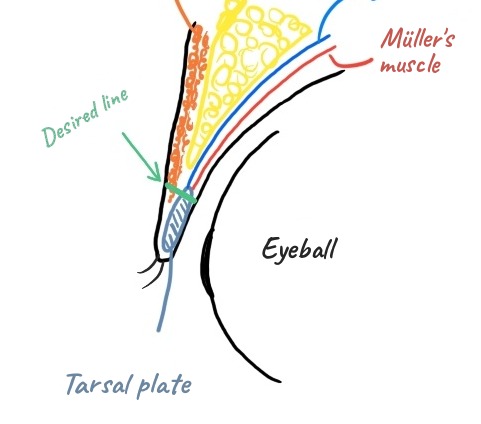 no.3 [Double Eyelid] Non-Incision Double Eyelid Surgery: Technique, Principle, Pros and Cons In this post, we'll look at non-incision (buried suture) double eyelid surgery, which I described earlier as the most ideal approach among double eyelid procedures. As mentioned before, non-incision surgery surgically creates the same connection between the skin and the tarsal plate (or levator muscle) that people with natural double eyelids already have. As shown in the illustration, the basic principle is to tie the skin and the tarsal plate together with a suture at the desired line. Non-incision surgery creates this connection with a suture through just a few tiny holes in the skin, without any incision . There are many variations of this technique, and that is why each clinic calls its method by a different name: the details of the technique differ. Here is the method I mainly use: As shown, six tiny holes are made along the desired line, Left: front view / Right: cross-section and the suture passes between them as if sewing, running under the skin and through the conjunctiva to create the connection . Because the suture sits beneath the skin, it isn't visible from the outside, and the knot is placed deep inside. Advantages of this method: 1. No incision, so recovery is fast. 2. The procedure is simple yet precise. 3. With multiple fixation points, the line is less likely to loosen. And if you are not satisfied with the result, 4. Removing just one knot can return the eyelid to its original state. However, non-incision methods have one drawback: the line can loosen . Next time, we'll look at why non-incision double eyelids sometimes come undone. WhatsApp Inquiries https://api.whatsapp.com/message/DE3GWE4FQGMDF1?autoload=1&app_absent=0 Sai Plastic Surgery — Phone Inquiries Main Line: +82-2-512-4647 * This post was written by Dr. Kwang-rae Kang, Director of Sai Plastic Surgery, with his own text and illustrations, for the purpose of providing medical information in compliance with Article 56(1) of the Korean Medical Service Act. + Read more
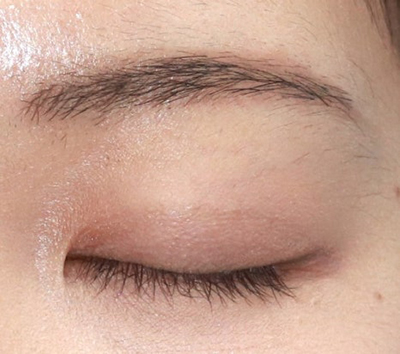 no.2 [Double Eyelid] What Is the Ideal Method of Double Eyelid Surgery? Most people who undergo double eyelid surgery want natural-looking results . Here, I believe that the term “natural” means more than simply looking unartificial. It means looking as though you were born with naturally defined double eyelids. Ultimately, I believe that the surgical technique that can best achieve this natural appearance is the ideal one. So, what conditions should an ideal double eyelid surgery meet? There are four key requirements: The scars should be invisible. The crease should form and disappear naturally when opening and closing the eyes. The results should last as long as possible. The desired eyelid shape should be achievable. In short, I believe there are four essential conditions. Among these, the first and second requirements— minimal scarring and natural eyelid movement —can be achieved through the buried suture technique (non-incisional method). Commonly referred to as the “non-incisional” or “natural adhesion” technique, these procedures all fall into this category. With the buried suture technique , scars become almost invisible over time. The crease disappears when the eyes are closed and forms naturally when the eyes are open. Furthermore, when the eyelid skin condition and underlying anatomy are suitable, the desired crease shape can be maintained stably for a very long time. Before surgery (left) 2 months after surgery (right) — Almost no visible surgical scars For these reasons, I consider the buried suture technique to be the most ideal method of double eyelid surgery. Of course, this technique has clear limitations, including the possibility of the crease loosening over time and the fact that the desired shape may not be achievable depending on the condition of the eyelid skin. Therefore, it is an ideal surgical option for patients whose eyelid characteristics are suitable and whose results are expected to remain stable over time. WhatsApp Inquiries https://api.whatsapp.com/message/DE3GWE4FQGMDF1?autoload=1&app_absent=0 Sai Plastic Surgery — Phone Inquiries Main Line: +82-2-512-4647 * This post was written by Dr. Kwang-rae Kang, Director of Sai Plastic Surgery, with his own text and illustrations, for the purpose of providing medical information in compliance with Article 56(1) of the Korean Medical Service Act. + Read more
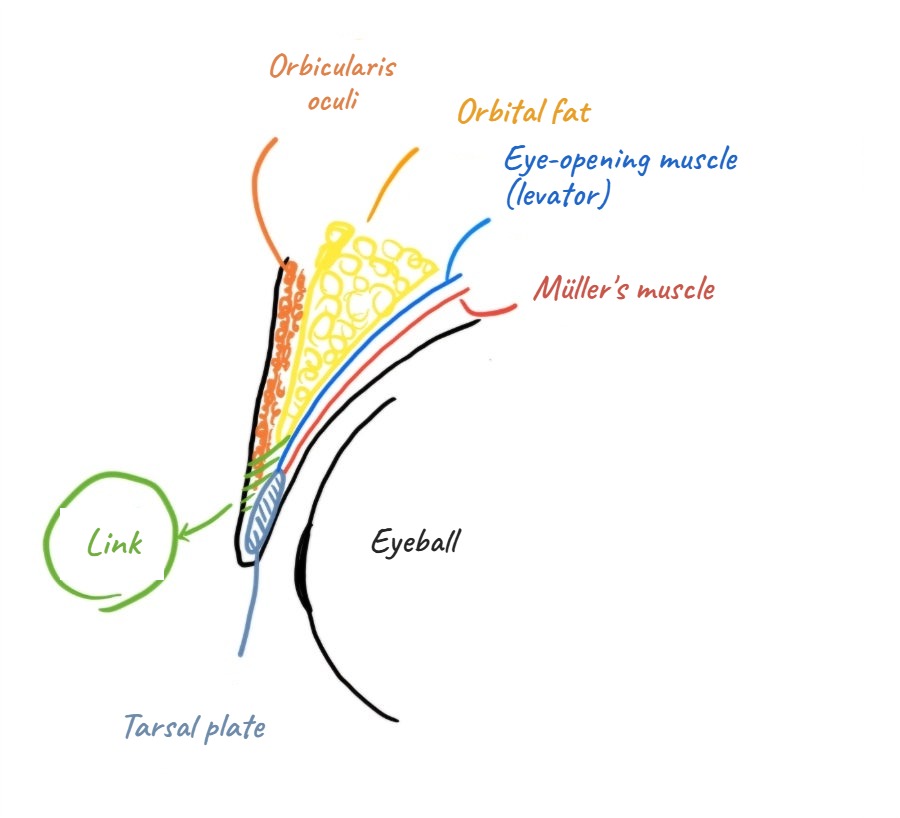 no.1 [Double Eyelid] The Structure of the Eyelid and How a Double Eyelid Forms Patients who come in for a consultation these days have done an impressive amount of research. Sometimes I'm amazed — "Wow, an ordinary person knows this much?" — and sometimes it's unfortunate, because the information they've gathered is wrong. So I'm starting this post to explain the most basic things, slowly, from the beginning. First, if you understand how a double eyelid forms , you can understand the surgical methods much more easily and judge what you personally need. So today, I'd like to briefly explain that basic principle. Double eyelid surgery is based on research into the structural difference between people who naturally have a double eyelid and those who don't . In other words, using the structure of an eye with a double eyelid as a reference, it is a surgery that artificially creates that structural connection in an eye without a double eyelid . Simply put, it can be described as the process of creating a 'path' for the double eyelid to form . The basic structure of the eyelid that you should know is as follows. At the edge of the eyelid, just beneath the eyelashes, there is a firm, cartilage-like structure called the *tarsal plate* . Two muscles, the levator muscle and the Müller's muscle , pull this tarsal plate upward, and that is how the eye opens. Cross-section of the eyelid and eyeball of a person with a double eyelid, seen from the side (Left) Eye closed / (Right) Eye open If you look at an eye with a double eyelid in cross-section from the side, you can see a difference between the closed eye (left) and the open eye (right). When the eyelid skin folds smoothly inward as the eye opens, a natural double eyelid is formed. For this to happen, the skin must be connected to the tarsal plate or the levator muscle underneath . Structure of the Asian eyelid However, in Asian eyes, this connection is often very low, or missing altogether. That is why hidden (inner) double eyelids and monolids are common. In addition, the *orbital fat* (the fat that is partially removed during double eyelid surgery) often extends down low, which interferes with the formation of a double eyelid and makes the eyelid look thick and heavy. In the end, double eyelid surgery is creating this connection anew at the height you want . Depending on the method, it can be divided into incisional, non-incisional, or partial-incision techniques, and, as needed, the orbital fat may be removed, or ptosis correction , which strengthens the muscles that open the eye (the levator muscle or Müller's muscle) , may be performed together. I've only covered the most basic points. You don't strictly need to know this, but I believe that knowing it will end up helping you. In the next post, I'll explain the non-incisional method among them in a bit more detail, step by step. WhatsApp Inquiries https://api.whatsapp.com/message/DE3GWE4FQGMDF1?autoload=1&app_absent=0 Sai Plastic Surgery — Phone Inquiries Main Line: +82-2-512-4647 * This post was written by Dr. Kwang-rae Kang, Director of Sai Plastic Surgery, with his own text and illustrations, for the purpose of providing medical information in compliance with Article 56(1) of the Korean Medical Service Act. + Read more