


no.18
[Double Eyelid] Who Needs Ptosis Correction (Eye-Opening Surgery)?
2025-12-19
More than 90% of people who come in for a double eyelid consultation
ask, "Do I need ptosis correction?"
That is how common the question has become.
More specifically, many people ask,
"I open my eyes using my forehead. Don't I need ptosis correction?"
"I look sleepy. Should I get ptosis correction?"
So what is ptosis correction,
and who actually needs it?
In Korea it is commonly called "nunmae gyojeong" (eye-shape correction), but that is not a medical term.
The accurate term is "blepharoptosis correction."
It is surgery to correct ptosis, a drooping upper eyelid.
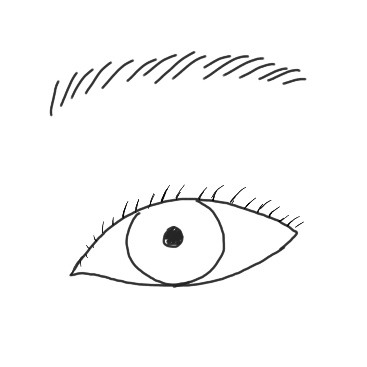
Look at the eye in this drawing.
There is no double eyelid,
but the eye still looks clear and alert.
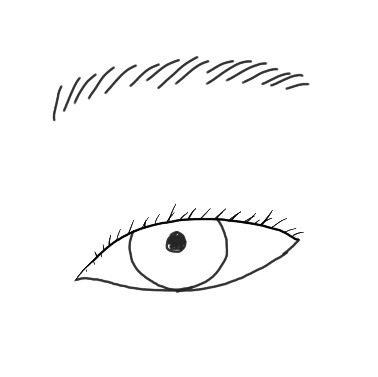
In this drawing, the eye looks less alert than in the previous one,
and it has become a little smaller.
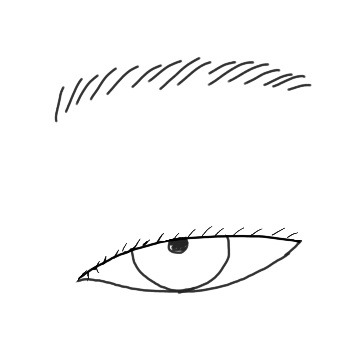
What about this eye?
It looks somewhat sleepy,
and the gaze does not look very bright.
Like this, when the eye-opening muscle is weak
and the dark part of the eye (iris) is not sufficiently visible (80–90%),
the condition is called ptosis.
In such cases, ptosis correction surgery,
in other words eye-opening (ptosis) correction surgery, is needed.
Let's look at an actual case.
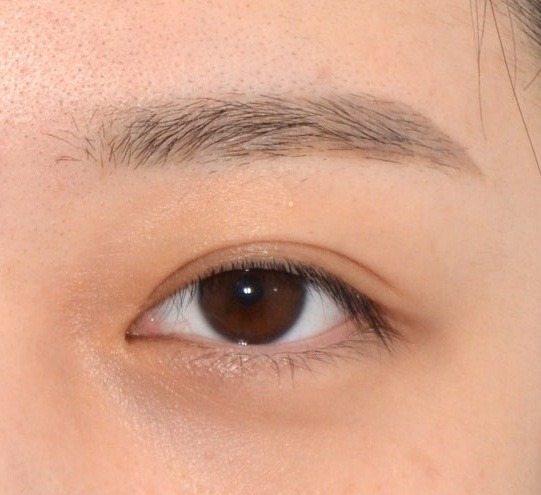
Before surgery
This patient had double eyelid surgery in the past, so there is a double eyelid,
but the eye-opening strength is weak,
so the eyes look sleepy.
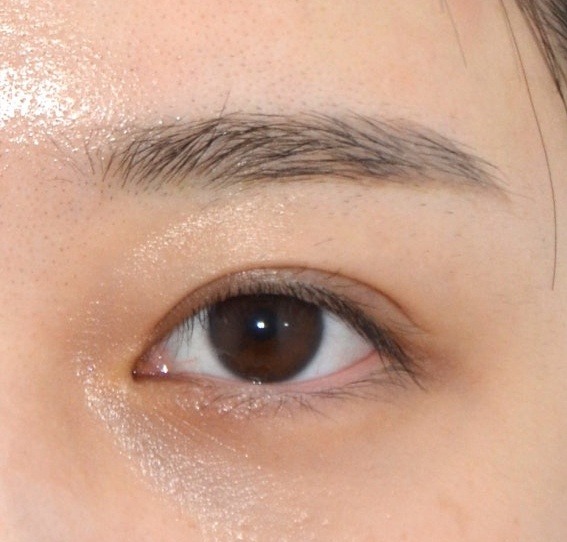
2 months after ptosis correction
After ptosis correction,
the eyes look more alert
and also look bigger.
Improving the eye-opening strength in this way,
separately from the double eyelid,
is what we call ptosis correction.
Related posts
▶ The Structure of the Eyelid and How a Double Eyelid Forms
▶ Does Double Eyelid Surgery Make Your Eyes Bigger?
WhatsApp Inquiries
https://api.whatsapp.com/message/DE3GWE4FQGMDF1?autoload=1&app_absent=0
Sai Plastic Surgery — Phone Inquiries
Main Line: +82-2-512-4647
* This post was written by Dr. Kwang-rae Kang, Director of Sai Plastic Surgery, with his own text and illustrations, for the purpose of providing medical information in compliance with Article 56(1) of the Korean Medical Service Act.