



no.15
[Lower Canthoplasty] Won't Lateral and Lower Canthoplasty Close Up Again?
2025-12-16
This is the question people ask most often when they come in for lateral and lower canthoplasty:
Won't it close up again?
And the thing people coming in for revision surgery say most often is:
"My previous surgery has completely closed up!"
Anyone interested in lateral and lower canthoplasty wonders about this.
Based on the surgical method I explained earlier,
in lateral canthoplasty the area is incised and sutured,
so it is not something that easily happens
for the sutured area to stick back together
and merge into one again, as shown in the illustration.
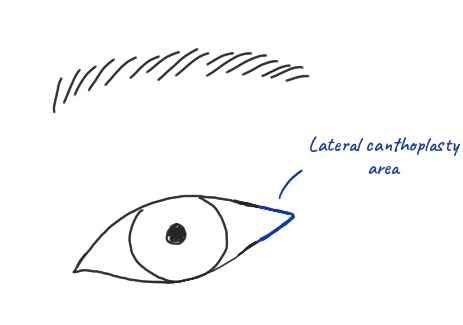
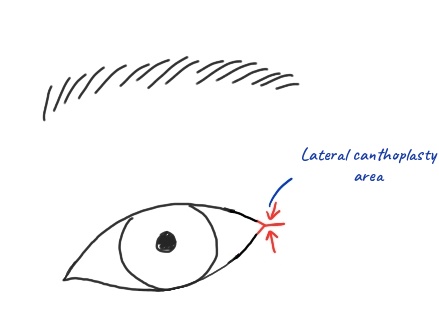
It is rare for the upper and lower edges to reattach
So when I look carefully at people who come in saying,
"My lateral canthoplasty closed up!"
in most cases the lateral canthoplasty is actually well maintained.
Of course, there are rare cases where it really does seem to have closed,
but I think these are often cases where there was no real effect from the start,
or where a non-incisional method was used.
Lower canthoplasty, however, is different.
Because lower canthoplasty works by pulling the eyelid down and fixing it,
what was pulled down can move back up somewhat, as shown.
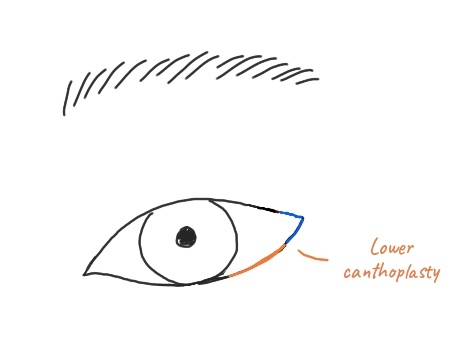
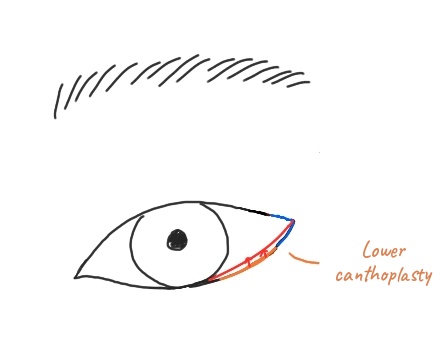
Over time, it rises slightly in the direction of the red arrows.
Most people who have had lower canthoplasty notice that,
over time, it rises to some degree compared with right after surgery.
That is why, during surgery, I lower it more than the final target.
This is called overcorrection.
How much to overcorrect
depends on the shape and structure of the eye.
Most people who say their lateral and lower canthoplasty "closed up"
actually experienced the lower canthoplasty rising considerably,
narrowing the gap so that it feels as if it has closed.
That is why revision of the lower canthoplasty is often needed.
Let's look at an actual case.
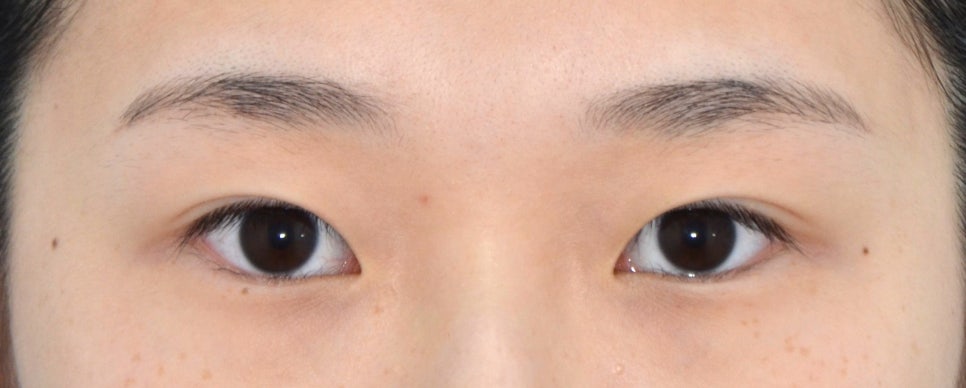
Before surgery.
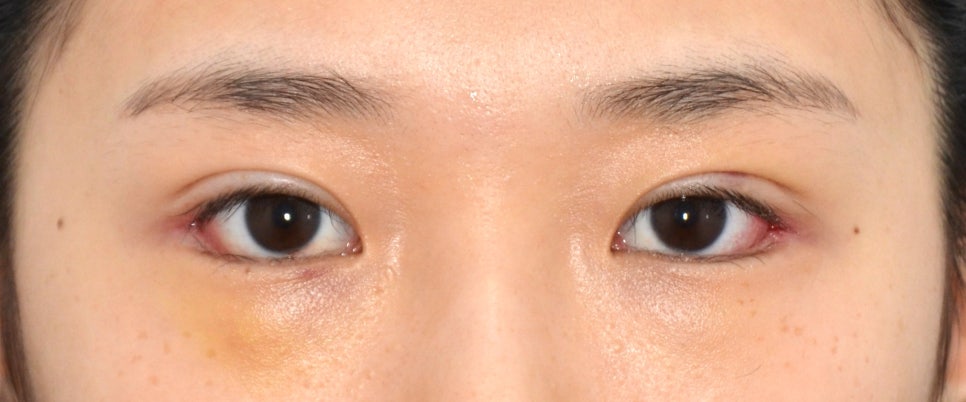
One week after surgery.
There is some redness and conjunctival swelling,
and the lower eyelid is pulled down a little more than looks natural.
This is the intended overcorrection.
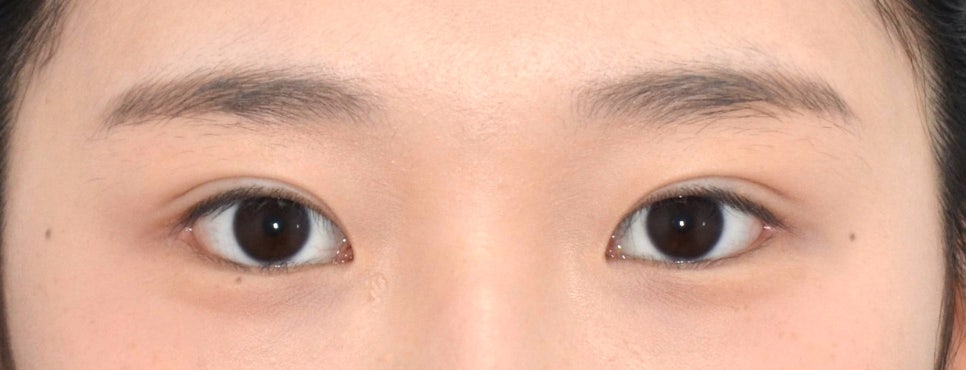
Three months after surgery, the overcorrected part has risen
and settled into place, looking natural.
If it rises all the way back to how it was before surgery, revision surgery is needed.
Deciding how much to overcorrect
so that the final shape looks good
depends on the surgeon's technique
and experience.
Related posts
▶ Lateral Canthoplasty: Method and Effects
▶ Lower Canthoplasty: Method and Effects
WhatsApp Inquiries
https://api.whatsapp.com/message/DE3GWE4FQGMDF1?autoload=1&app_absent=0
Sai Plastic Surgery — Phone Inquiries
Main Line: +82-2-512-4647
* This post was written by Dr. Kwang-rae Kang, Director of Sai Plastic Surgery, with his own text and illustrations, for the purpose of providing medical information in compliance with Article 56(1) of the Korean Medical Service Act.