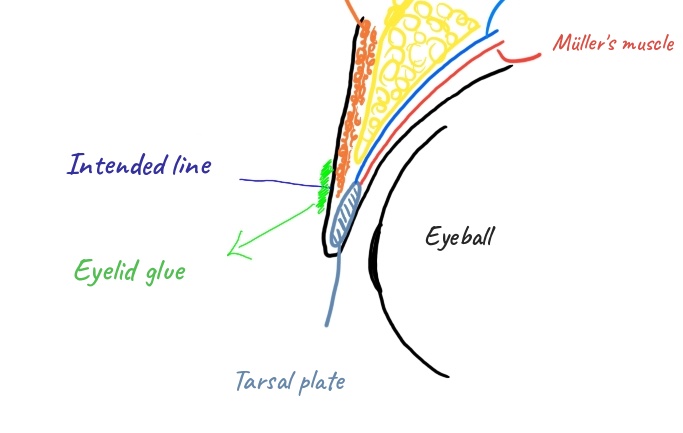
 no.54 [Other Questions] Do Double Eyelid Glue and Tape Stretch Your Skin? Among people without a double eyelid, many use double eyelid glue or double eyelid tape. Students in particular use them a lot, and many of them won't even go out without glue or tape. It seems many of these students keep using them into adulthood. Here I want to talk about these items, double eyelid glue and tape, that create a double eyelid. First, let's look again at how a double eyelid forms. Reading this post first will help, but you can also go straight to the content below. ▶ The Structure of the Eyelid and How a Double Eyelid Forms A double eyelid forms when the skin naturally folds inward as the eye opens. Double eyelid glue and tape stick this overlapping skin together so that the fold is held in place. Taking double eyelid glue as an example, you apply the glue to the skin as shown below, Glue applied with the eyes closed and when you open your eyes to create the line, the skin folds and sticks together, as in the illustration, so it looks as if there is a double eyelid line from the front. Eyes open after applying glue However, with a line made with glue, the skin stays stuck together even when you close your eyes. Eyes closed while using glue So even with the eyes closed, the skin stays pulled and folded. The skin is then constantly pulled, folding and unfolding over and over, and over the long term, it becomes stretched. The shape created this way folds in a way that differs from how a real double eyelid works, and even a very high line can be created simply by sticking the skin together. On the other hand, it is hard to create an effect like epicanthoplasty or an upper-lid opening. Double eyelid glue and double-sided tape work on almost exactly the same principle. Also, because the skin is repeatedly pulled apart and stuck back together, the skin itself gets irritated, dermatitis often develops, and the skin gradually becomes thicker and stiffer. Skin that could originally have been treated with the non-incision method may end up needing an incision. Once dermatitis develops, full recovery takes anywhere from 2 weeks to 1 or 2 months. Single-sided double eyelid tape can be effective for people who already have a double eyelid and want to raise it a little, or for those with thin skin. Single-sided tape applied Because single-sided tape does not pull and stretch the skin, it causes problems relatively rarely. In conclusion, double eyelid tape and glue have many drawbacks when used long term. For young people, even though there is a chance it may come undone, I think it is better to have non-incision surgery and let it last even a few years. If you are planning surgery, it is best to avoid double eyelid glue and tape as much as possible. If dermatitis develops, you will not be able to have surgery for at least a month. Of course, some people use glue or tape without any visible problems. But in reality, the skin stretches, and despite being young, some people end up needing the skin cut away with an incision, which is why plastic surgeons dislike double eyelid glue and tape... ㅠ Related posts ▶ About Using Double Eyelid Glue and Tape ▶ Which Eyes Are Good Candidates for Non-Incision Double Eyelid Surgery? WhatsApp Inquiries https://api.whatsapp.com/message/DE3GWE4FQGMDF1?autoload=1&app_absent=0 Sai Plastic Surgery — Phone Inquiries Main Line: +82-2-512-4647 * This post was written by Dr. Kwang-rae Kang, Director of Sai Plastic Surgery, with his own text and illustrations, for the purpose of providing medical information in compliance with Article 56(1) of the Korean Medical Service Act. + Read more
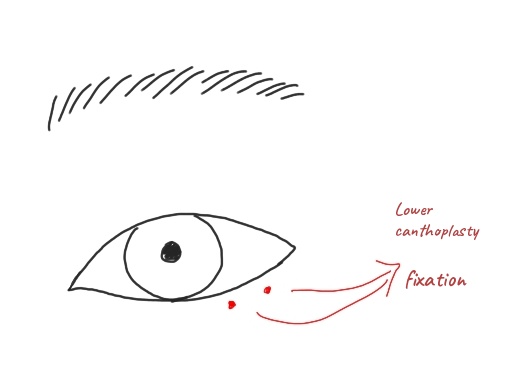 no.51 [Other Questions] Does Lower Eyelid Fat Repositioning Undo Lateral and Lower Canthoplasty? This is a question I have been asked a lot recently. In fact, some patients come in for revision because their lower canthoplasty came undone after lower eyelid fat repositioning. I'll explain why this happens, and how lower canthoplasty can be kept from coming undone even after lower eyelid fat repositioning. Basically, the procedure affected by lower eyelid fat repositioning is lower canthoplasty. Lateral canthoplasty has little to do with lower eyelid fat repositioning. As shown in the illustration, lower canthoplasty has fixation points, and depending on the surgeon there may be one, two or more of them. When performing lower eyelid fat repositioning, however, a transconjunctival incision is made and the surgery is done through a narrow opening. Generally, the longer the incision, the more room there is and the easier the surgery. As in the illustration, if the incision for lower eyelid fat repositioning is extended far toward the outer corner, and the incision and dissection reach the lower canthoplasty fixation, the fixation can come loose. That is why some people say their lower canthoplasty comes undone, or came undone, after lower eyelid fat repositioning. So when performing lower eyelid fat repositioning, what should be done to keep the fixation from coming loose? As in this illustration, the incision must be limited so that it does not extend to the area of the lower canthoplasty. The dissection must also avoid the fixation area. However, this narrows the field of view and makes the surgery more difficult. Also, in practice, it is hard to know exactly how far the lower canthoplasty fixation extends. Even with a limited incision, it can still come loose during dissection, and there are many variables. So the surgery has to be done quite carefully. Even with care, it can come loose. On the other hand, with care, it is also possible to operate without it coming loose. A month or two ago, a patient who had lateral and lower canthoplasty with me some time ago came in for a consultation. At another clinic, she had been told that her canthoplasty could come undone after lower eyelid fat repositioning, so she came in worried. I explained everything just as above, told her I would operate while causing as little damage as possible, and performed the surgery. Fortunately, the lower canthoplasty did not change at all, and only the lower eyelid fat repositioning was done. I remember the surgery being a bit more difficult. The surgery is already done through a narrow opening, and when that becomes even narrower, it is a tough operation for the surgeon. The patient was satisfied after surgery, and for me too it was an especially rewarding operation. In conclusion: having lower eyelid fat repositioning does not necessarily mean your lateral and lower canthoplasty will come undone. If you would like to know more about lower eyelid fat repositioning: ▶ Effects and Surgical Method of Lower Eyelid Fat Repositioning Related posts ▶ Lower Canthoplasty: Method and Effects (Fascial Fixation vs. Periosteal Fixation) ▶ Won't Lateral and Lower Canthoplasty Close Up Again? WhatsApp Inquiries https://api.whatsapp.com/message/DE3GWE4FQGMDF1?autoload=1&app_absent=0 Sai Plastic Surgery — Phone Inquiries Main Line: +82-2-512-4647 * This post was written by Dr. Kwang-rae Kang, Director of Sai Plastic Surgery, with his own text and illustrations, for the purpose of providing medical information in compliance with Article 56(1) of the Korean Medical Service Act. + Read more
 no.46 [Other Questions] Why Do You Have to Fast and Stop Medications Before Surgery? For a successful surgery, there are many things patients need to prepare or follow beforehand. Rather than simply listing them all, let's look at why a few of them matter. If you understand the reasons, it is easier to follow them and to prepare well for a good result. 1. Fasting Fasting is a basic requirement for surgery these days. Even simple procedures are mostly done under IV sedation, and many surgeries are performed under general anesthesia. If there is food left in your stomach, you may vomit during sedation or general anesthesia, and when you are not fully conscious, the food can go into your airway, creating a risk of choking or aspiration pneumonia. That is why we instruct you to fast for a sufficient period depending on the surgery. Not only solid food but also liquids such as water and coffee are, of course, not allowed, and neither are candy or chewing gum. Only medications that you absolutely must take may be taken, with a small amount of water. Also, many people these days use Wegovy, Mounjaro and similar medications, which make food stay in the stomach longer, so a much longer fasting period is needed. The fasting time can vary depending on when you last used them, so be sure to tell the clinic. 2. Stopping supplements, herbal medicines and other medications These can interfere with surgery. If they contain substances that interfere with blood clotting, bleeding becomes hard to control during surgery, which not only makes the operation more difficult but can also make bruising and swelling much worse. Taking something like garlic extract can actually make it harder to stop bleeding. Some medications can also affect IV sedation, so be sure to tell us about any medications you take and any underlying conditions before surgery. 3. Removing nail polish from fingernails and toenails During surgery, we monitor oxygen saturation to check that you are breathing well. This is measured using the fingernails or toenails, and if you are wearing nail polish, the sensor cannot take a reading. So please remove it before coming in, and be sure to remove gel nails in particular. This is for your safety, so please follow it carefully. 4. Removing all metal accessories This may sound obvious, but there is a reason for it. To use the electrocautery device (Bovie) during surgery, there must be no metal objects such as earrings or piercings on your body. Piercings can be hard to remove, and they may be damaged if removed at the clinic, so we recommend taking them out before you come. Related posts ▶ Is It OK to Have Surgery in Summer? ▶ What We Do to Reduce Swelling After Double Eyelid Surgery WhatsApp Inquiries https://api.whatsapp.com/message/DE3GWE4FQGMDF1?autoload=1&app_absent=0 Sai Plastic Surgery — Phone Inquiries Main Line: +82-2-512-4647 * This post was written by Dr. Kwang-rae Kang, Director of Sai Plastic Surgery, with his own text and illustrations, for the purpose of providing medical information in compliance with Article 56(1) of the Korean Medical Service Act. + Read more
 no.30 [Other Questions] Is It OK to Have Surgery in Summer? As winter ends, one of the things many people planning plastic surgery worry about is: "Is it OK to have surgery in summer?" Why did this idea come about? In the past, in hot and humid conditions, the risk of inflammation from bacterial infection was higher, so it was better to avoid surgery in summer. Standards of hygiene were also lower back then. That seems to be why people were told to avoid surgery in summer. Summer is just as hot and humid now as it was then. If anything, it seems even hotter and more humid these days. But today, wherever you go, there is air conditioning. Sterile supplies are easy to buy, and the standard of hygiene is extremely high. Especially after surgery, you recover comfortably at home in a cool, dry environment thanks to air conditioning, so it is rare to see a wound become inflamed. In fact, once the wound has healed and the swelling is going down, it helps to stay lightly active and to use warm compresses, and in that respect, summer can actually have some advantages over winter. In conclusion, in today's world, there is no reason to avoid any kind of surgery just because it is summer. Related posts ▶ How to Reduce Swelling Faster After Double Eyelid Surgery ▶ How to Minimize Scarring After Double Eyelid or Epicanthoplasty Surgery WhatsApp Inquiries https://api.whatsapp.com/message/DE3GWE4FQGMDF1?autoload=1&app_absent=0 Sai Plastic Surgery — Phone Inquiries Main Line: +82-2-512-4647 * This post was written by Dr. Kwang-rae Kang, Director of Sai Plastic Surgery, with his own text and illustrations, for the purpose of providing medical information in compliance with Article 56(1) of the Korean Medical Service Act. + Read more
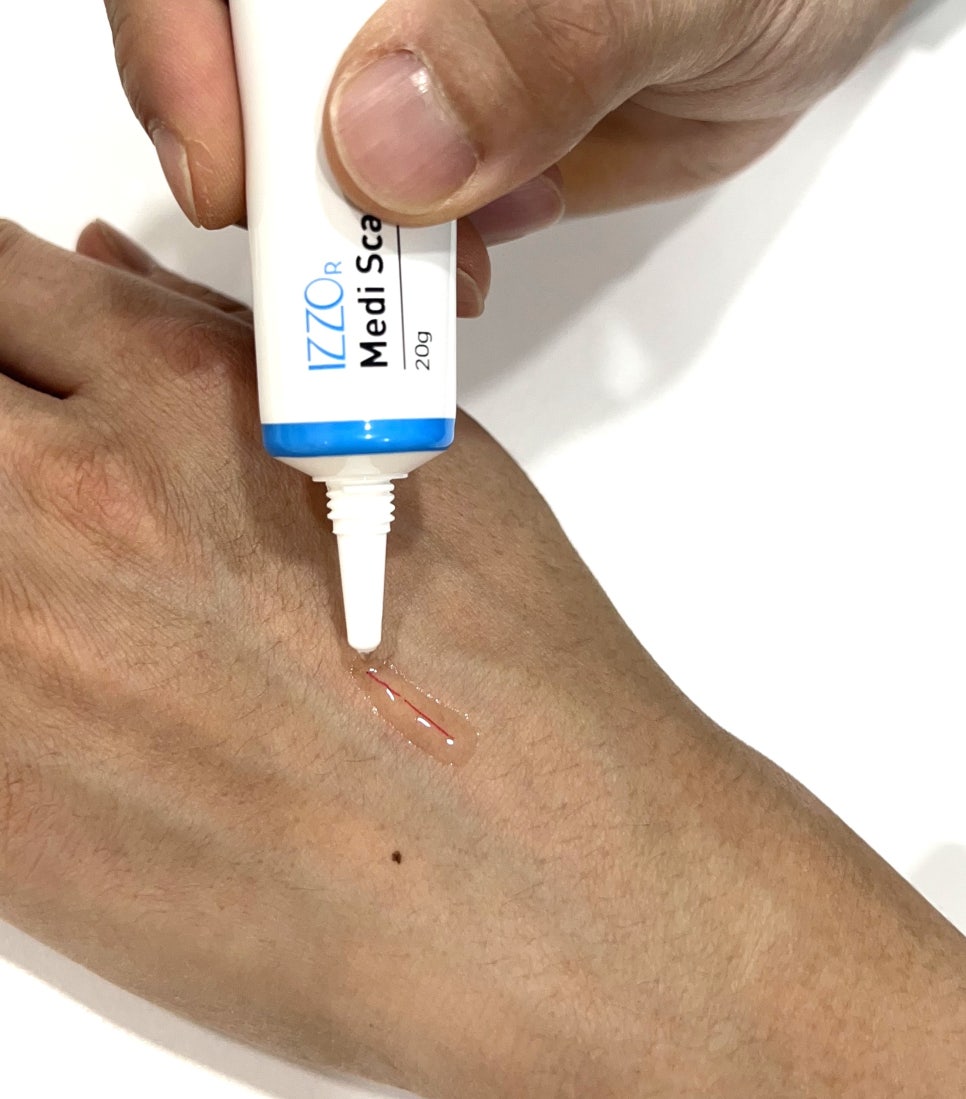 no.23 [Other Questions] How to Use Silicone Scar Gel and for How Long Today I want to explain how to use scar gel, something many people use without really knowing the right way to apply it. As I mentioned in my previous post, I recommend scar gels made with silicone. So how should you use a silicone scar gel? ▶ How to Minimize Scarring After Double Eyelid or Epicanthoplasty Surgery As shown in the photo, scar gel is a clear gel. Simply apply a thin coating over the scar, and it dries in about 10 to 15 minutes. Silicone does not work by being absorbed into the skin; the coating itself is what produces the effect. The coating should stay on for at least 12 hours a day. So if it gets wiped off, just reapply it, and if it hasn't been wiped off, simply leave it as is. Applying it before bed is a good idea. Once the coating has dried, you can wear makeup over it. As for how long to keep applying it, research papers recommend 6 months, but even 3 to 4 months counts as a success. Because applying it every day is a hassle, many people don't even manage a month or two. It may be a hassle, but I hope everyone applies it diligently and that it helps minimize your scars. Related posts ▶ How to Minimize Scarring After Double Eyelid or Epicanthoplasty Surgery ▶ Will Incisional Double Eyelid Surgery Leave a Scar? WhatsApp Inquiries https://api.whatsapp.com/message/DE3GWE4FQGMDF1?autoload=1&app_absent=0 Sai Plastic Surgery — Phone Inquiries Main Line: +82-2-512-4647 * This post was written by Dr. Kwang-rae Kang, Director of Sai Plastic Surgery, with his own text and illustrations, for the purpose of providing medical information in compliance with Article 56(1) of the Korean Medical Service Act. + Read more
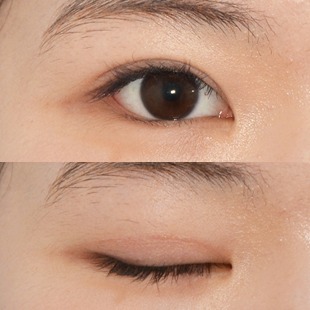 no.22 [Other Questions] How to Minimize Scarring After Double Eyelid or Epicanthoplasty Surgery If you have had incisional double eyelid surgery or epicanthoplasty (inner-corner surgery), the skin was incised and sutured, so you may be worried about scarring. Performing the surgery cleanly and well is the most important factor for the scar, but here I would like to share what patients themselves can do. To make it easy to follow, I have organized it by period. 1. From right after surgery until stitch removal (week 1) During this period, it is important to keep the wound as clean as possible and to keep it from drying out. The clinic usually prescribes an eye ointment; apply the ointment so that the stitch area always stays moist. It goes without saying, but keep water off the area. 2. From stitch removal until week 2 Keep applying the ointment for about 3 days after the stitches are removed. Washing your face and light contact with water is fine, but do not let the area soak in water for a long time. The wound has not yet healed firmly, so this is a period when you need to be careful. 3. From week 2 onward Research papers on scar management recommend taping from this period onward, meaning tape is applied to reduce the tension on the wound. However, double eyelid incisions and epicanthoplasty sites cannot be taped. So as a second-best option, we use silicone scar gel. Well-known products include Dermatix Ultra and Kelo-cote. These products form a silicone coating over the scar, which retains moisture and also helps counter tension. Silicone scar products are not absorbed into the skin; they form a coating, so the idea is to keep that coating on at all times. Using it from week 2 up to 6 months is considered effective. For how to use silicone scar gel, see the post below. ▶ How to Use Silicone Scar Gel and for How Long 4. If the scar becomes somewhat wide or raised, from 1 month after surgery, low-dose steroid (triamcinolone) injections can be used to soften the scar. This can be tried up to 3 to 4 times at one-month intervals. 5. If the redness is prominent, laser treatment can also help. I usually recommend it from 1 month after surgery, but recent reports suggest that starting laser treatment early, around week 2, is also effective. 6. Other treatments that "may" help include massaging the wound area: from about week 2 onward and ointments containing onion extract, heparin and similar ingredients (e.g., Ventrax Gel, Contractubex, Noscarna), but these are classified as having a low level of medical evidence. In fact, the skin around the eyes does not tend to scar easily. Repeated incisional surgery or improper care can make a scar visible, but in most cases, after 6 months to a year, it gets much, much better. Next time, I will explain how scars naturally change over time. Sources Updated Scar Management Practical Guidelines: Non-invasive and invasive measures, Journal of Plastic, Reconstructive & Aesthetic Surgery (2014) 67, 1017e1025 Evidence-Based Scar Management: How to Improve Results with Technique and Technology Plast Reconstr Surg. 2016;138(5S):165S-178S Other research papers and AI-assisted searches Related posts ▶ Will Incisional Double Eyelid Surgery Leave a Scar? ▶ How to Reduce Swelling Faster After Double Eyelid Surgery WhatsApp Inquiries https://api.whatsapp.com/message/DE3GWE4FQGMDF1?autoload=1&app_absent=0 Sai Plastic Surgery — Phone Inquiries Main Line: +82-2-512-4647 * This post was written by Dr. Kwang-rae Kang, Director of Sai Plastic Surgery, with his own text and illustrations, for the purpose of providing medical information in compliance with Article 56(1) of the Korean Medical Service Act. + Read more
 no.19 [Other Questions] How to Reduce Swelling Faster After Double Eyelid Surgery After double eyelid surgery or eye-corner surgery (canthoplasty), everyone wishes the swelling would go down quickly. So how can you make it go down faster? 1. First, keep the swelling down The first 3 days after surgery are when the area swells up. During this period, to keep the swelling down, you should diligently apply cold compresses. As long as you don't go so far as to get frostbite, the more often the better. Doing it frequently throughout the day is ideal. 2. After cold compresses, switch to warm compresses After 3 days, the goal is to help the swelling go down faster. Warm compresses improve blood circulation, which helps the swelling subside faster. Again, the more often the better, and it is good to continue even 1 to 2 months after surgery. 3. Take frequent walks Taking light walks often improves blood circulation, and because you are upright, the swelling drains downward well. If you just lie down or sit looking at your phone, the swelling won't go down! 4. Sleep with your upper body slightly raised If you sleep on your side, sleeping on your right side makes the right side swell more, and sleeping on your left makes the left side swell more. If possible, sleep on your back with your upper body slightly raised, using something like a large pillow. 5. Anti-swelling teas, pumpkin juice and the like: do they work? To bring the swelling down faster, some people drink anti-swelling teas or pumpkin juice. Because the scientific evidence is weak, I don't recommend them. That said, there is no harm in having them, so I think it is fine if you want to. 6. Don't eat ramen before bed I said ramen, but in general, if you eat salty food or overeat before going to sleep, your eyes will be puffy in the morning, and post-op swelling will likewise get worse and last longer. If possible, it is best to avoid late-night snacks. 7. Open your eyes properly! After eye surgery, because of the swelling, opening your eyes feels uncomfortable. Even so, you need to practice opening them clearly. If you lift your chin and open your eyes only halfway because it is uncomfortable, the swelling will be very slow to go down. Even if it is a little uncomfortable, tuck your chin and keep practicing opening your eyes clearly; that way the swelling goes down faster and the line settles in nicely. For patients who have surgery at our clinic, we create a page like this and send them the link. We get many questions about care after surgery, so we hope it helps, even a little. Related posts ▶ What We Do to Reduce Swelling After Double Eyelid Surgery ▶ Will Incisional Double Eyelid Surgery Leave a Scar? WhatsApp Inquiries https://api.whatsapp.com/message/DE3GWE4FQGMDF1?autoload=1&app_absent=0 Sai Plastic Surgery — Phone Inquiries Main Line: +82-2-512-4647 * This post was written by Dr. Kwang-rae Kang, Director of Sai Plastic Surgery, with his own text and illustrations, for the purpose of providing medical information in compliance with Article 56(1) of the Korean Medical Service Act. + Read more
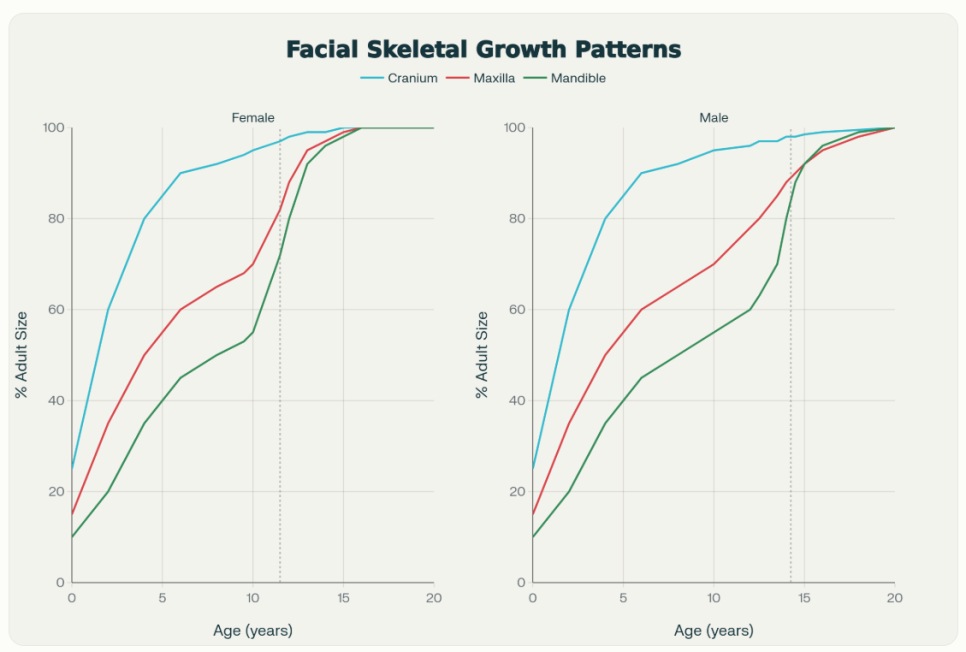 no.10 [Other Questions] From What Age Is Plastic Surgery Possible? This post covers a question I often hear from parents of middle and high school girls. It is the go-to line of parents who come in reluctantly because their daughter has asked for double eyelid surgery: "From what age is double eyelid surgery possible? She's still too young, isn't she?" Being asked this feels a little like asking the cat to guard the fish, so I find it slightly awkward. Some parents are hoping I will say she is too young for surgery, and others seem genuinely curious. Since some of my own nieces and nephews are in college, my relatives ask me this a lot too. To give an answer, I first need some evidence, and here is the most useful evidence I can show you. Comparison of facial skeletal growth, female (left) vs. male (right): percentage of adult size by region This growth chart combines Scammon's Growth Curve with data from several research papers. The blue line shows growth of the cranium, the red line the maxilla (upper jaw), and the green line the mandible (lower jaw). The area around the eyes is formed partly by the cranium and partly by the maxilla, and as the graph shows, growth around the eyes finishes earlier than in other areas. In females, growth appears to be almost complete by around age 13. So does this give us a justification for double eyelid surgery in middle school? In fact, double eyelid surgery is sometimes performed on children as young as 5 or 6. When severe ptosis could interfere with the development of vision as the child grows, or when entropion (lashes poking the eye) causes significant discomfort, double eyelid surgery or ptosis correction is performed even at a young age. Rather than physical age, I believe what matters is the reason for surgery and the benefit the surgery will bring. For a student who applies double eyelid glue or tape every single day to create a crease, or a student under heavy stress about their appearance, if a double eyelid can resolve that, surgery can be helpful. Related posts ▶ About Using Double Eyelid Glue and Tape ▶ Who Needs Ptosis Correction (Eye-Opening Surgery)? ▶ Which Eyes Are Good Candidates for Non-Incision Double Eyelid Surgery? WhatsApp Inquiries https://api.whatsapp.com/message/DE3GWE4FQGMDF1?autoload=1&app_absent=0 Sai Plastic Surgery — Phone Inquiries Main Line: +82-2-512-4647 * This post was written by Dr. Kwang-rae Kang, Director of Sai Plastic Surgery, with his own text and illustrations, for the purpose of providing medical information in compliance with Article 56(1) of the Korean Medical Service Act. + Read more
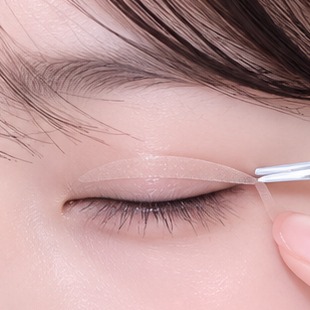 no.8 [Other Questions] About Using Double Eyelid Glue and Tape You want a double eyelid, but surgery isn't an option for you right now, so as a second-best option you turn to double eyelid glue or double eyelid tape. But in the end, many people still come to a plastic surgery clinic for double eyelid surgery. Here I would like to talk a little about double eyelid glue and tape, which many people in their teens and twenties use. During double eyelid consultations, when I examine the eyelid skin, I often see people whose skin around where the crease forms is red and swollen, with white flaking. These are people who have developed dermatitis from double eyelid glue or tape. In people who have used them for anywhere from a few months to several years, repeated bouts of dermatitis have changed the texture of the skin. Unfortunately, if you come in with skin in this condition, double eyelid surgery is not possible right away... It takes at least a few months for the dermatitis to settle. But many of these patients say they can't go out without glue or tape... T-T so these cases are often difficult. Even without dermatitis, using glue or tape for a long time can stretch the skin, and in some cases the loose skin has to be removed, which means an incision is required. Of course, not everyone who uses double eyelid glue or tape has problems. Some people have used them for years and still have excellent skin. If I were to rank them by how hard they are on the skin, it would be glue, then double-sided tape, then single-sided tape, with glue appearing to be the most irritating. People who used single-sided tape usually had normal skin. Also, people whose crease does not form well even with glue or double-sided tape are more likely to need the incisional method for surgery as well. To everyone reading this, I sincerely hope you will not use double eyelid glue or tape for too long. Related posts ▶ Which Eyes Are Good Candidates for Non-Incision Double Eyelid Surgery? ▶ Incisional Double Eyelid Surgery: How Is It Done? ▶ What Is the Ideal Method of Double Eyelid Surgery? WhatsApp Inquiries https://api.whatsapp.com/message/DE3GWE4FQGMDF1?autoload=1&app_absent=0 Sai Plastic Surgery — Phone Inquiries Main Line: +82-2-512-4647 * This post was written by Dr. Kwang-rae Kang, Director of Sai Plastic Surgery, with his own text and illustrations, for the purpose of providing medical information in compliance with Article 56(1) of the Korean Medical Service Act. + Read more